How Robotics Education Develops Creativity and Problem-Solving Skills at an ICSE School
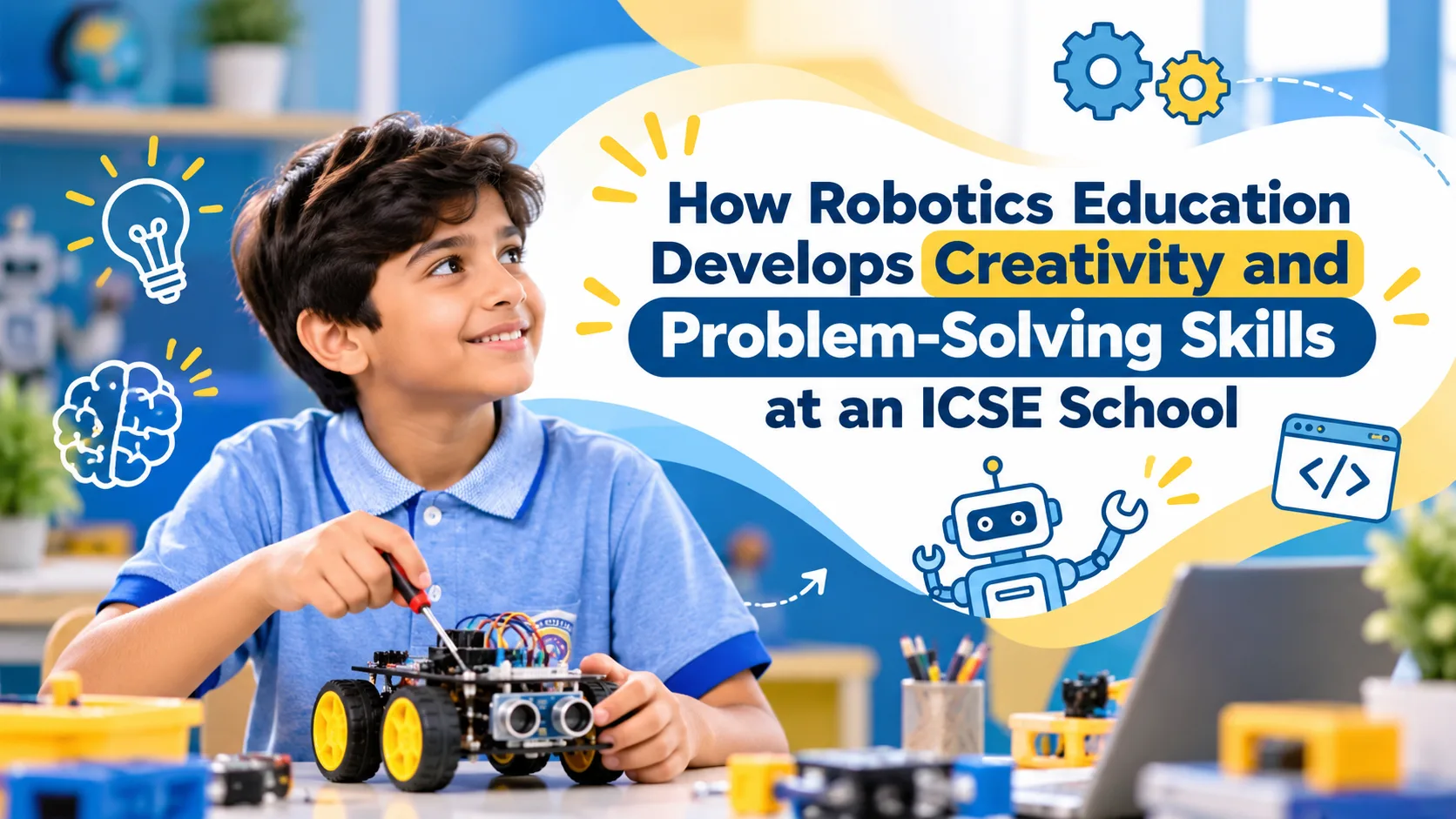
A robot either works or it doesn't and that simple fact is what makes robotics such a useful classroom tool. Students at ICSE schools design circuits, write code, watch them fail and fix them. Along the way they pick up reasoning and imagination that a textbook alone rarely builds.
Introduction
Ask a child to memorise a formula and you get recall. Ask the same child to build a robot that follows a line without crashing and you get something closer to real learning. As a top school in Agra, Allenhouse Public School has built its robotics programme around this difference. Students sketch a design, wire it, code it, watch it fail and try again. This piece walks through what that process actually does for creativity and problem-solving in ICSE students and why more schools are treating robotics as core learning rather than an after-school club.
What is Robotics Education and Why Does It Matter in ICSE Schools?
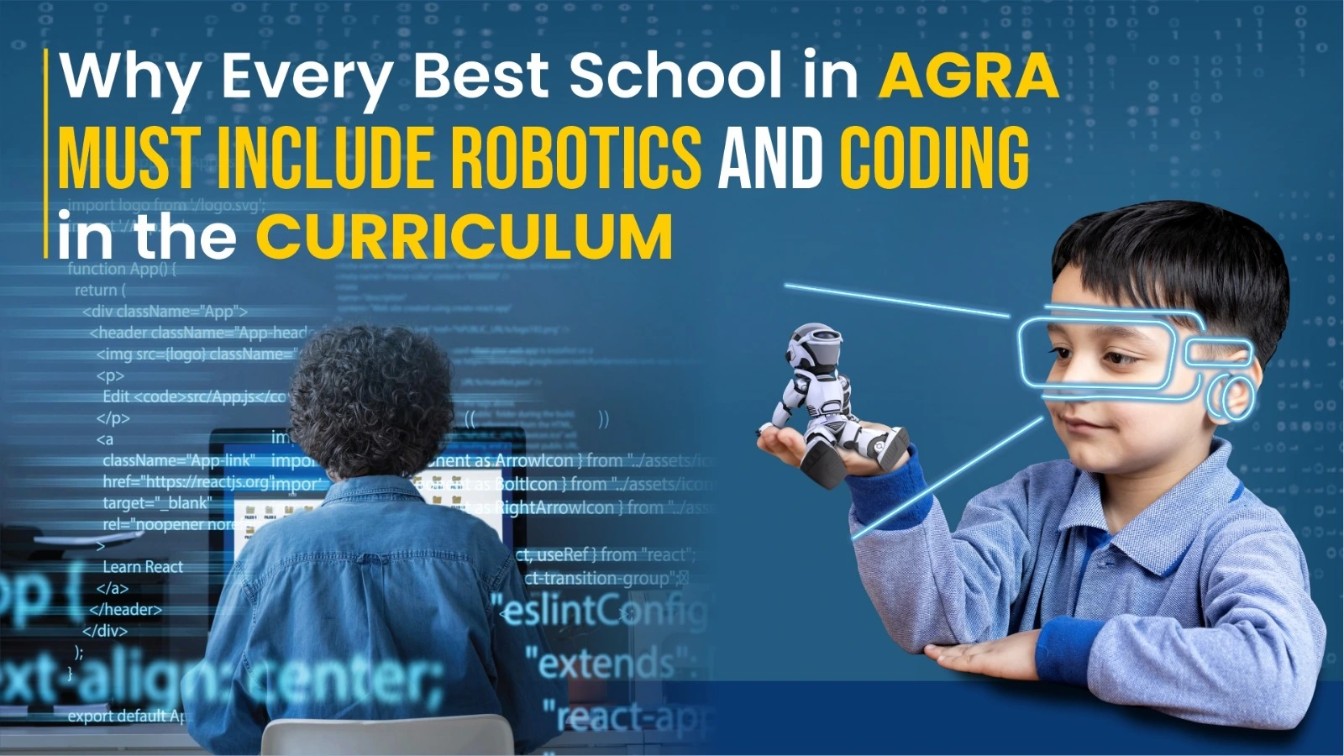
Robotics education is a hands-on subject. In it students design, build, code and test physical machines, putting science, technology, engineering and maths to work on a real problem instead of a page.
Robotics is not just a gadget-building club that meets after the bell. It serves the following purposes-
It pulls physics, maths and computer science into one activity, rather than teaching each in isolation.
A student who cannot yet explain torque in a physics test will often understand it the moment a robotic arm droops under its own weight.
Robotics also moves assessment away from pure recall- instead of describing how a sensor works, the student has to make one work.
That fits neatly with how the ICSE board already grades practical and project work which is one reason robotics has moved from optional club to timetabled subject at several top schools in Agra campuses, Allenhouse included.
How Does Robotics Education Develop Creativity in Students?
Robotics asks students to imagine a solution, build it from scratch and rebuild it when it fails, which turns a vague idea into an actual working model.
1.Turning ideas into working models
Ask a student to make a robot move, sense, or respond and there is no single correct wiring diagram waiting in the back of the book. That gap is where creative thinking shows up. Two students given the same kit will place their sensors differently, choose different code logic and end up with two robots that solve the same task in different ways. Neither is wrong. Students also stop treating a failed attempt as an embarrassment and start treating it as one design option they've now ruled out, which is a fairly grown-up way to think about mistakes for an eleven-year-old.
2.Projects that reward an odd idea
Not every robotics brief has one acceptable answer. A line-following robot can be built with three different navigation strategies and all three can work. An obstacle-avoiding bot rewards a student who thought to angle a sensor sideways instead of straight ahead. Some of the more memorable projects at Allenhouse have paired robotics with storytelling or art, where a robot becomes the centrepiece of a small stage set the students built themselves.
How does Robotics Improve Problem-Solving Skills in Children?
When working with/on a robot students spend most of a robotics class testing, failing, working out why and correcting, which is a far more direct route to logical reasoning than a worksheet with one right answer. At top schools in Agra, robotics is seen to improve problem solving skills through:
Learning through trial and error, on purpose
When a robot doesn't move the way it's supposed to, a student has to break the problem down- is it the code, the wiring, the sensor placement, or the battery?
Guessing rarely works twice, so students learn to isolate the actual fault instead of changing everything at once and hoping
That habit, tested piece by piece, is closer to how an engineer debugs a real system than anything a written exam can simulate
It also takes patience most nine-year-olds don't arrive with and builds it over a term rather than a week
The thinking robots teach
Underneath the wiring, robotics is teaching computational thinking without ever using that phrase in class.
Sequencing shows up as arranging code steps in the right order
Pattern recognition shows up when a student notices the same three lines of logic causing the same glitch
Abstraction shows up when a messy real-world task, like sorting objects by colour, gets broken into steps small enough for a machine to follow
None of this is unique to computer science; it's the same reasoning used in engineering and in plenty of decisions that have nothing to do with a screen.
How Do ICSE Schools Teach Robotics in the Classroom?
Robotics classes at ICSE schools such as Allenhouse can follow a build-test-improve approach rather than a lecture-heavy format. Students begin with a problem, plan a solution, build a model, write the code, test it and then improve it based on what happens.
A lesson that starts with a problem, not a chapter
Instead of beginning with a long explanation of a robotics concept, a lesson can start with a practical challenge. Students then work through the problem step by step, making decisions and testing whether their ideas work.
Understand the challenge- Students first identify what the robot needs to achieve
Plan a solution- They sketch possible designs and decide which approach to try
Build the model- Students assemble components, connect sensors and work with microcontrollers
Write the code- They create instructions that tell the robot how to respond
Test and troubleshoot- Students observe where the robot fails and identify what needs changing
Improve the design- They modify the code, wiring or structure and test it again
Demonstrate the result- The session can end with students showing how their finished model works
What each part of the process actually teaches
Every stage of a robotics project develops a different set of skills. The value comes from students having to connect these skills rather than learning coding, hardware and problem-solving as completely separate activities.
Coding- Students practise sequencing, logic and debugging when they identify why a programme is not producing the expected result
Hardware assembly- Connecting components develops spatial reasoning, coordination and an understanding of how physical systems work
Testing- Repeated trials teach students to examine results, identify errors and make evidence-based changes
Problem-solving- Students learn to break a larger challenge into smaller, manageable steps
Communication- Explaining how a robot works encourages students to express technical ideas in clear language
Collaboration- Team projects require students to share tasks, discuss solutions and resolve differences
Persistence- When a model fails to work on the first attempt, students learn to treat the failure as part of the process rather than the end of it
Together, these activities make robotics education for ICSE students a practical learning experience where concepts are applied rather than simply memorised.
What Skills Do Students Gain Beyond Academics?
Robotics can develop skills that sit outside conventional academic assessment. Students have to work with others, explain their thinking, manage setbacks and make decisions when there is no single obvious solution.
Teamwork- Small-group projects require students to divide tasks such as coding, wiring, testing and documentation
Communication- Students learn to explain their design choices and describe problems clearly to teachers and classmates
Decision-making- Choosing between different designs teaches students to consider possible outcomes before acting
Adaptability- When an approach fails, students have to change their method instead of simply repeating the same steps
Time management- Projects with a fixed demonstration or submission deadline encourage students to plan their work
Confidence- Successfully building and explaining a working project gives students an opportunity to see the result of their own decisions
These skills may not appear as separate marks on a report card, but they become part of how students approach unfamiliar problems, group work and practical challenges.
How does Robotics Compare To Traditional Classroom Learning?
A traditional lesson mostly asks a student to absorb and recall information, while a robotics lesson asks them to apply it and see, immediately, whether it worked.
None of this means robotics should replace a normal lesson. A student still needs the underlying physics or maths explained somewhere. What robotics does is give that theory a physical, testable form, which is roughly what most people mean when they talk about experiential learning without saying the phrase out loud.
Why Should Robotics Be Part Of Stem Education at a Top School in Agra?
Robotics belongs in STEM teaching because it closes the gap between a physics formula and a working machine and it builds the exact analytical and creative habits the ICSE curriculum already tries to grade through project work.
A student who has coded a sensor to respond to light doesn't need the concept of a feedback loop explained twice. Early, repeated exposure to coding and basic automation also matters because these are the tools most future workplaces already run on, whatever field a student eventually chooses. And because ICSE assessment already leans on continuous, application-based work, a school that runs robotics well is essentially preparing students for its own exam pattern. That overlap is part of why robotics has moved up the priority list at a top school in Agra.
Allenhouse Public School has built its own name partly on this, recognised as a top school in Shastripurum and a best school in Agra for the way it blends classroom theory with things students actually build.
How Does Robotics Prepare Students for Future Careers?
Robotics introduces students to programming, engineering and problem-solving while they are still at school. More importantly, it gives them repeated practice in trying an idea, testing it, finding an error and improving it. These experiences can help students become more comfortable with unfamiliar technical problems later in their education and careers.
Builds programming logic- Writing code for a robot helps students understand sequencing, conditions, commands and debugging
Introduces engineering concepts- Working with motors, sensors, circuits and mechanical parts gives students an early understanding of how physical systems work
Connects theory with application- Students can see what happens when a concept is applied to a real working model rather than learning it only from a textbook
Develops problem-solving habits- Robotics projects require students to identify problems, consider possible solutions and test different approaches
Makes failure part of learning- A robot that does not work as expected gives students a practical reason to find the error and try again
Encourages independent thinking- Students often have to decide how they want to approach a challenge rather than follow one fixed method
Supports future technical learning- Early exposure to coding, electronics and robotics can give students useful familiarity when they encounter related subjects in higher education
Builds confidence with unfamiliar problems- Repeated hands-on challenges can make students more willing to experiment, troubleshoot and refine their ideas
Conclusion
Building a robot mostly teaches a child to think. Coding, design and the slow work of fixing what doesn't work the first time build reasoning and resilience that a textbook struggles to build alone. At Allenhouse Public School, robotics labs are set up so students meet a problem before they meet the theory behind it, then work backward to figure out why their fix worked. That order, problem first, is why robotics now sits in the regular timetable, not the after-school list, at a top school in Agra.
Your Queries Answered
1.What age group is suitable for starting robotics education?
Upper primary is a reasonable starting point for basic concepts. The kits and coding get more demanding through middle and senior school.
2.Does robotics education help with subjects like maths and science?
Yes, usually. Building a physical model of a formula tends to make the formula stick better than reading it off a page.
3.Do students need to know how to code before joining a top school in Agra?
No. Most robotics programmes at top schools in Agra teach coding fundamentals alongside the hardware, so a complete beginner isn't at a disadvantage.
4.How is robotics different from a regular computer science class?
Computer science is mostly software and logic on a screen. Robotics adds the physical layer, so a student sees their code actually move something.
5.Can robotics build a child's confidence?
It tends to. Getting a robot to work after several failed attempts gives most kids a genuine sense of having earned it and that carries over into other subjects.